









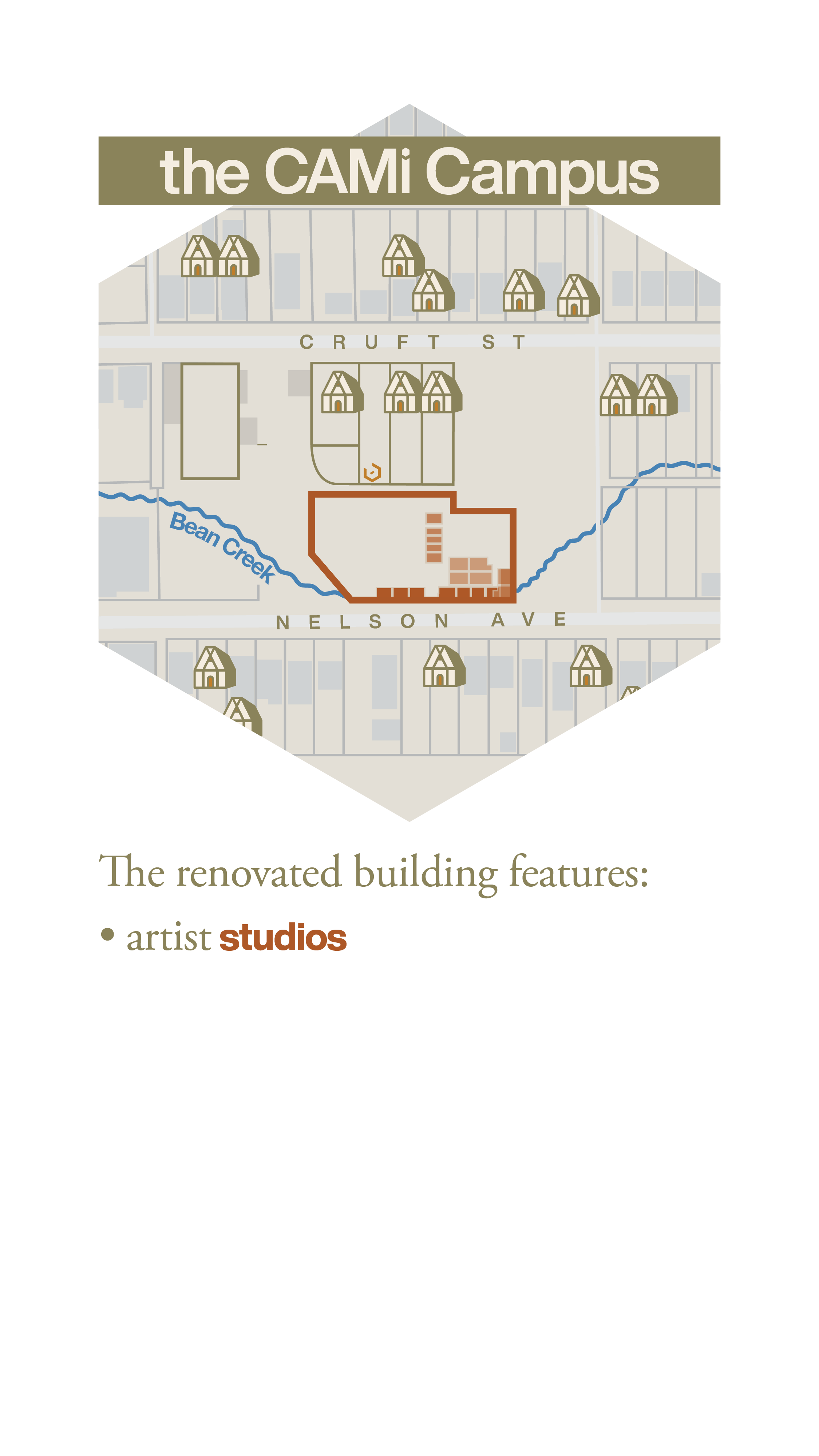
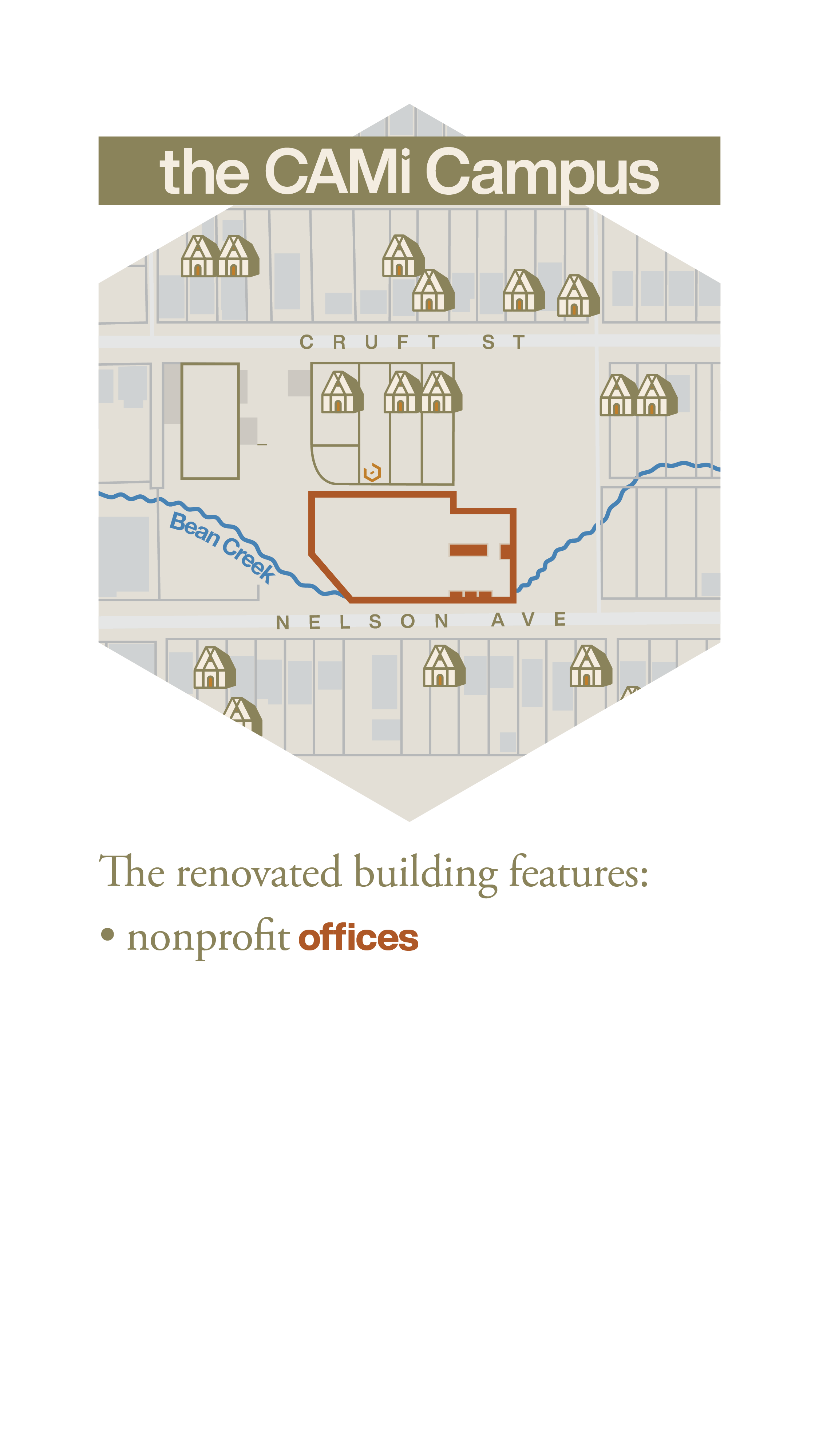
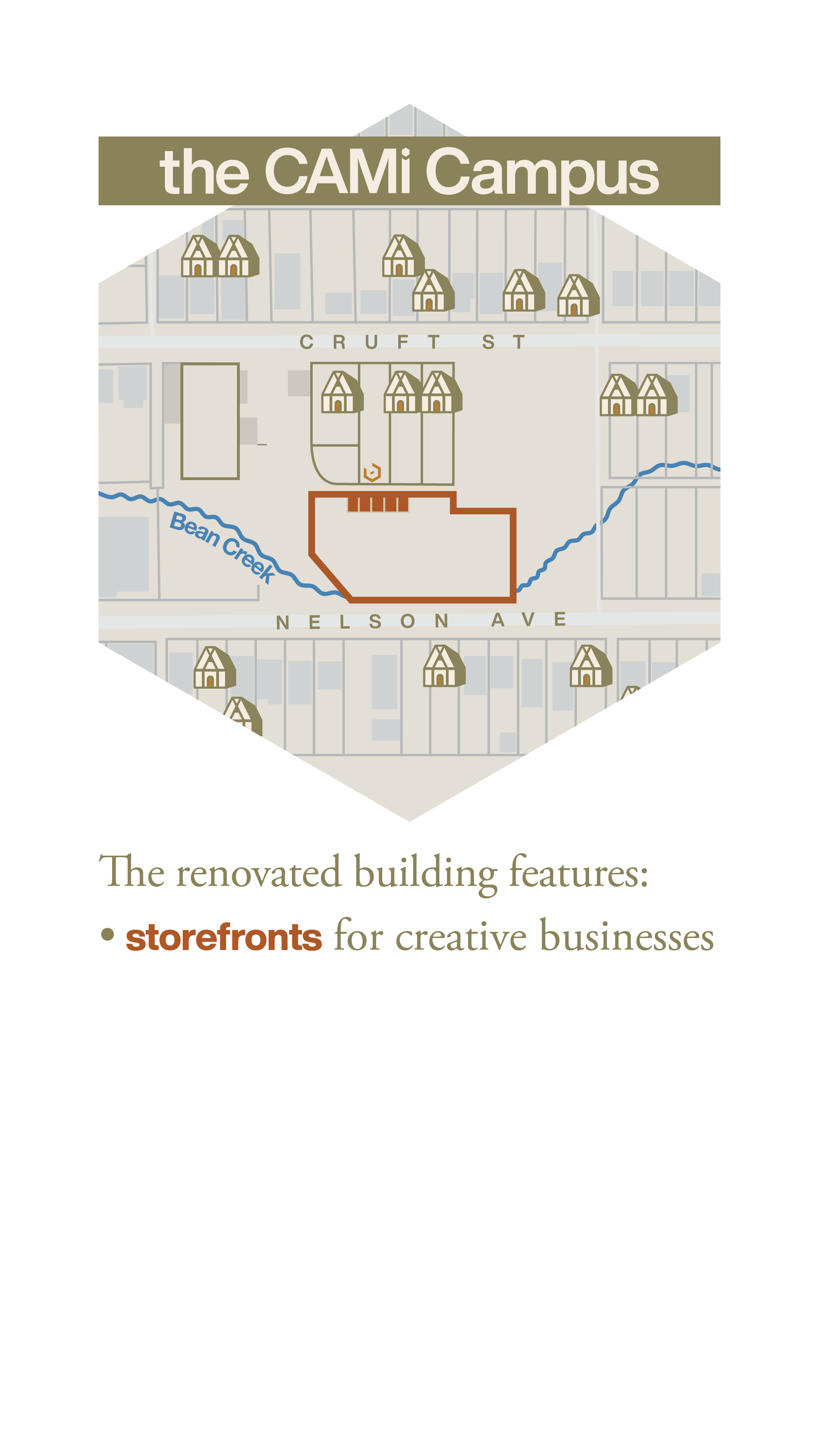
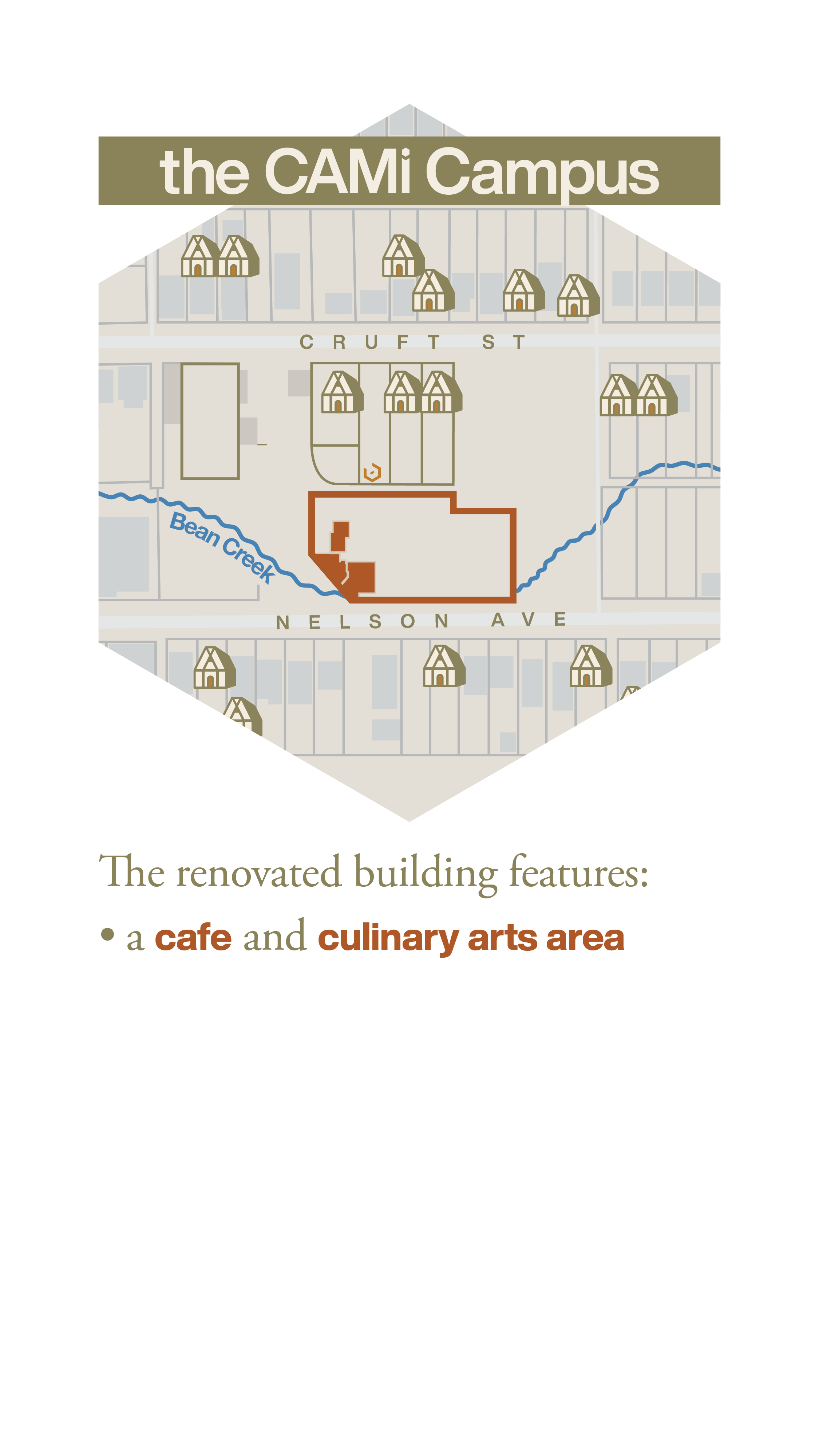


More about the CAMi project
Core Value
Adaptive
Reuse
The adapted structures running through our campus reinforce the connection of our neighborhood’s industrial and agricultural heritage to the universal conversation that is art.
While undertaking an artist-led adaptive-reuse project is far more expensive than building from scratch, we find it well worth the investment for the value its history and unique qualities will add for visitors, as well as the reduced environmental impact.
Core Value
Natural,
Accessible,
and Social
CAMi is designed to be accessible in all ways: intellectually, physically, and spiritually.
Our campus and visitor experience are shaped by biophilic design principles that integrate elements of nature into the built environment to strengthen our connection to the natural world and boost well-being.
Art is a healer. Art facilitates and encourages conversations. Art is an avenue for connection.
Art is a healer. Art facilitates and encourages conversations. Art is an avenue for connection.
Core Value
Gesamtkunstwerk

This German term, popularized in America by architect Frank Lloyd Wright, means “a total work of art.” That’s how we’re approaching CAMi.
it won’t just be a home for art but a total work of art in itself.
Here, we’re considering and connecting the smallest details to create an accessible and harmonious place for people to enjoy contemporary art in all genres.
The Colors
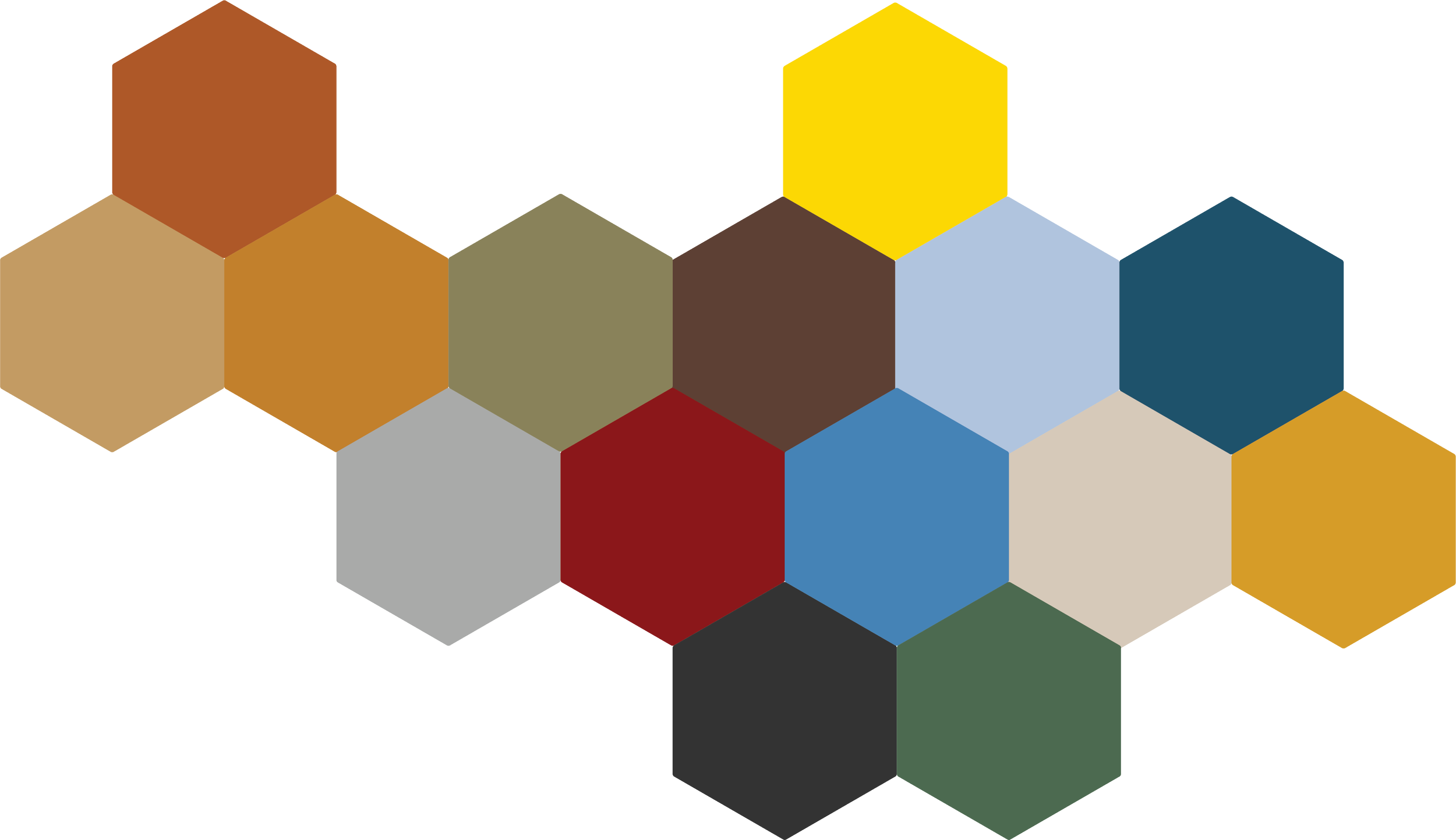
The CAMi look and colors we’ll use on our campus are informed by the trees and native plants on our campus and the industrial color palette inside our buildings — deep green, pale purple, orange rust, oxide red, safety yellow, the brown of weathered wood.
All of this links back to prioritizing the concepts of biophilia and contextualizing the buildings and campus in their place and history.
The Hexagons
For CAMi, the hexagon symbolizes our network of artists, neighbors, and visitors — individual parts linked together to create something whole.
It is a visual metaphor for a living system, continuously expanding and evolving, just like the museum and community it represents.
The hexagon is a shape where nature and industry meet — found in honeycombs, steel bolts, and the cellular patterns of life.
The hexagon represents connection, efficiency, and harmony. Each side fits perfectly with the next, forming a structure that is both strong and flexible, geometric and organic.

We’re also inspired by two current uses of hexagons in our pocket park on the campus — concrete pavers made on site for the Indianapolis Bee Sanctuary living sculpture by St. Louis-based artist Juan William Chávez and stone pavers at the base of our amphitheater that are the same as ones used on the Indianapolis Cultural Trail. These link us broadly to art, nature, and to our city.

Iconography
We love icons and their past, present, and future roles in human civilization. On the CAMi campus, we’ll utilize a variety of icons to develop a unique and fun system for wayfinding and interactivity.