Keren Cytter: Rose Garden

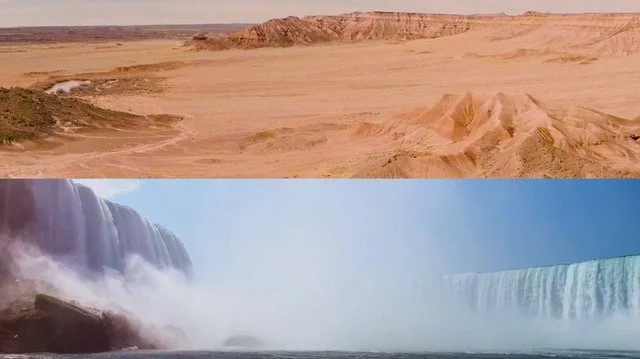
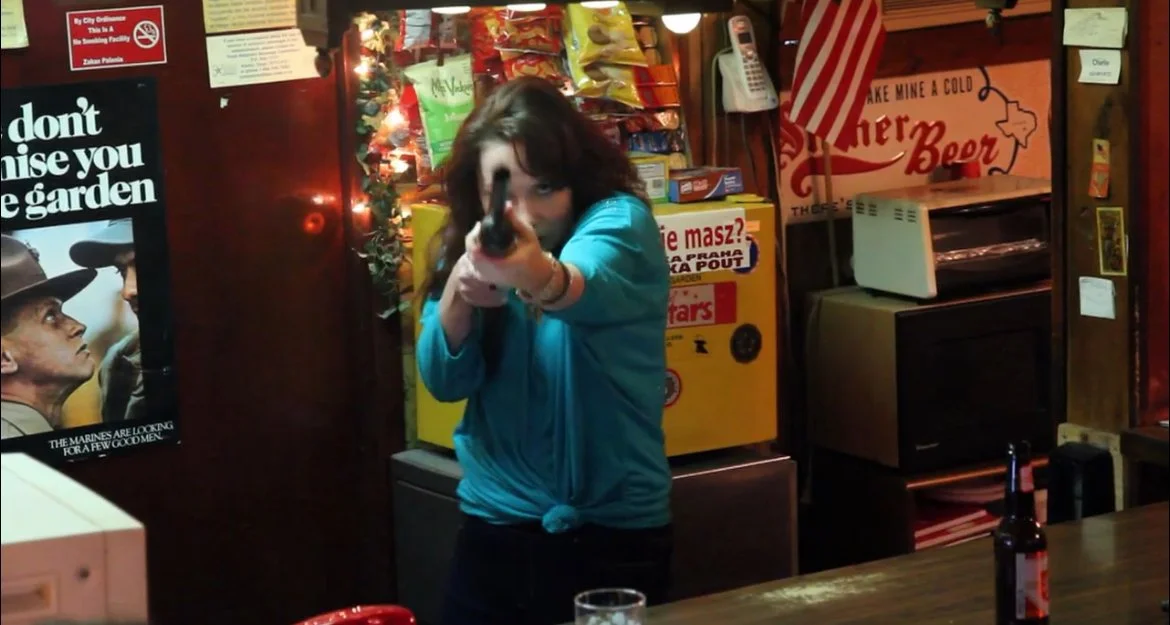
Cytter's short 2014 film explores the unsettling duality of American culture's ideals regarding being protectors of life and harbingers of death. This title is a reference to both the 1964 Joanne Greenburg book I Never Promised You a Rose Garden, which deals with mental illness and the 1971-84 Marine Corp recruitment campaign “We Don’t Promise You A Rose Garden.” These references are meant to clue the viewer in that the seemingly ordinary setting hides a distorted reality. As the tension builds, multiple guns and disjointed conversations between characters escalate the sense that the calm is about to be shattered. A chaotic shooting spree unfolds against the backdrop of normal daily life. The chilling final scene serves as a grim conclusion addressing violence and its pervasive presence within American culture.

Read More
SOMA

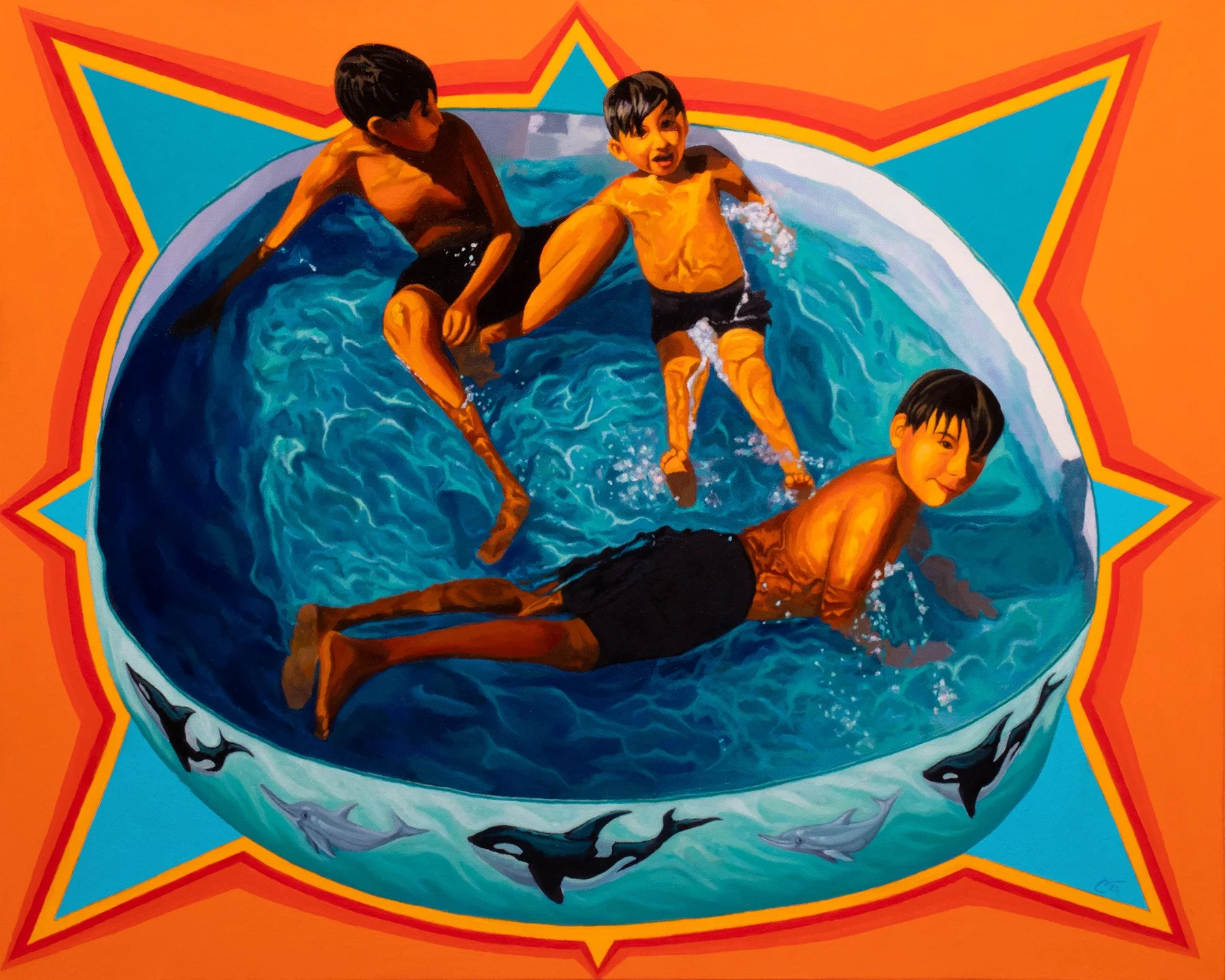
A group exhibition featuring the work of Jo Archuleta, Nehemiah Cisneros, Tommy Lomeli, Katherine Looney, October Sharify, Isaac Tapia and Cesar Velez exploring the supernatural and ethereal states of somatic responses. Guest curated by Yashi Davalos the exhibit is inspired by Aldous Huxley’s novel Brave New World, where soma was a fictional drug used to pacify civilians in a state of existential bliss and disassociation. Exploring the socialized perceptions of figures occupying space, Soma takes on confronting perceived utopia and dysmorphia in this exhibition.

Read More
Will Higgins: Museum of Fabulosity

Included in this pop-up museum, made to resemble a small-town history museum, are 16 amazing stories, many so strange they may seem made-up. But they are not made up. They are all absolutely true. They are paired with amazing photographs and also fabulous objects that approximate long lost Indy icons — boxing gloves worn by Lou Thomas the night he killed Arne Andersson; the chair Cannonball Adderly tipped back in the night he discovered Wes Montgomery; James Snow’s Panama hat; Jinx Dawson’s skull; Max Emmerich’s spikes…”

Read More
Jason Wesaw: Sovereign Spirits

Potawatomi (Turtle Clan) artist Jason Wesaw’s exhibit consisting of sculpture, drawings, prints, and installation is linked to the beliefs of his culture related to land, specifically the ground where CAMi Tube now sits. This land has been part of Potawatomi lands at different times in history before the United States existed. For this reason, Wesaw used earth and materials from Terri Sisson Park on the CAMi campus to create some of the works in this fully commissioned show.

Read More
exhibitionHannah2025
Picnic at the Park

Join us for this powerful performance that explores the unpredictable nature of life and the strength it takes to move forward in the face of adversity. A seemingly perfect picnic on a sunny day turns to chaos, reminding us that faith is a choice, and joy is a decision: even in the most unpredictable of circumstances. But as the storm rages on, so does our resilience.

Read More
Tree of 40 Fruit: 126 Tube Factory

This truly unique single tree grows 40 different types of stone fruit — including peaches, plums, apricots, nectarines, cherries, and almonds. Our tree is titled 126 Tube Factory because it is artist Sam Van Aken’s 126 tree he created for this site through the process of grafting branches into the tree. The Tree of 40 Fruit blossoms in varied tones of pink, crimson, and white each spring. And, in the summer, it bears various fruits. This is one of 20 trees like this around the world. These trees are not only creative endeavors but also serve as conservation efforts, preserving heirloom and antique fruit varieties not commonly found in commercial agriculture.

Read More
Ben Hall: Trunk Rattle Sound Bath

Trunk Rattle Sound Bath merges ongoing areas of Ben Hall’s research into polyrhythm (the simultaneous use of two or more contrasting rhythms), sonic immersion, and ancestral resonance through the lens of embodied listening. The title draws from the cultural experience of low-end frequencies booming from car trunks — windows shaking with no discernible rhythm, the body absorbing it all. “Vibrational frequencies are in everything,” Hall says. “Our bodies. We are observing by vibration even when we shut down. Our nervous system is still there, thrumming.”

Read More
Flore Laurentienne

Each performance is a chance to step into a world where music and nature intertwine—a rare and intimate experience.

Flore Laurentienne is an open window to the technicolor soundscapes of Mathieu David Gagnon – the Canadian composer, producer and multi-instrumentalist who shapes vast orchestral sound to interpret the rugged wilderness and waters of his native Québec. The namesake of an inventory documenting St. Lawrence Valley flora, Flore Laurentienne illumes the science and spirit of his surrounds through expansive string orchestrations melded with the textures and experimentation of early analogue synths.

Read More
Steven Yazzie and Nancy Baric: The Nearness of Distance

“My Child, I will feed you, give you good health, and I will give you strength and courage.”

These are the opening words of Steven J. Yazzie’s 2015 video, Mountain Song, which appear scrawled across the inky blank screen in white letters. The work evokes that of an epic poem akin to Homer or Virgil, signifying a journey that lies before the one who watches and listens to it.

Read More
exhibitionHannah2025
Terri Sisson Park

Terri Sisson Park, designed by Rundell Ernstberger’s Daniel Liggett in close collaboration with Big Car Collaborative staff artists, features many ways for visitors to experience and enjoy art and nature while also socializing with others. It’s open to the public during daylight hours.

The park greenspace borders and connects the two contemporary art museum buildings on our campus, nature, and local waterways. And these welcoming and restorative spaces have really helped establish our block as a campus. They directly tie in with the idea that the museum serves as a center for peace and restoration in the community.

The Efroymson Family Fund made the naming of Terri Sisson Park possible. Terri Sisson is the mother of Big Car co-founder and Tube Factory curator, Shauta Marsh. Dedicating the park to Terri, who passed away in 2022, is especially fitting because the park is a shrine to motherhood.

“Otherhood and Motherhood are two main themes that thread through this greenspace,” Marsh says. “It’s a place for people who have no one. It’s a space for people who have more people in their life than they know what to do with.”

“My mother was a bottomless ocean of love and patience,” Marsh says. “She saw the best in people. And that’s the spirit the world really needs. That’s why we will celebrate her with the naming of this park. It was the meaning of her to hold a space for everyone, for total strangers, for friends, for family.”

Read More
Benjamin Berg:░▓ I Can See the Pixels ▓░

Computers do whatever you tell them to, even if you tell them to make a mistake.

There are some seemingly bad ideas behind Benjamin Berg's exhibition I Can See the Pixels. For starters, everything is created using the 1980s-era GIF image format, which is hated by today's computer programmers for its limited color palette and inefficient storage. Also, the source images are small and low-resolution. Worst of all, he forces his computer to use colors that are totally wrong, nowhere close to the ones it needs. What's wrong with this picture?

Read More
Julie Xiao: A Journey

Thirty-foot-long scrolls telling a story of self acceptance and belonging will fill the Main Gallery of Tube Factory artspace starting November 1. The “Jellyfish Person” is the central character in Indianapolis-based artist Julie Xiao’s large-scale ink and gouache works. In Xiao’s immersive exhibit, the audience will follow — and may identify with Jellyfish’s pursuit of finding a place to feel welcomed at, to fit in, and to feel at home.

Read More
exhibitionJulie Xiao2024
Elisa Harkins: Ekvnv (Land), the Sacred Mother from Which We Came

With this exhibit, Harkins looks at land in two different ways: a path toward healing due to the desecration of burial mounds in New Harmony, Indiana and how the Land Back movement addresses climate change. Harkins, a multi-disciplinary artist based in Tulsa, Oklahoma, and Tube Factory curator Shauta Marsh, researched and worked on this exhibit for five years as part of Big Car Collaborative’s decade-long research project, Social Alchemy, that explores utopia and dystopia with an emphasis on the southern Indiana town of New Harmony that was twice the site of utopian experiments.  


Read More
Hatis Noit

“Words cannot describe everything we feel. How can one accurately verbalise the sensation we feel when we’re a newborn and our mother holds us in her arms, and we feel her skin on our cheek. We clearly feel her warmth and humidity, some feeling of love from her, but it’s tough to verbalise it perfectly. Music is a language that can translate that sensation, feeling, the memory of love.” — Hatis Noit

Read More
Keren Cytter: Ocean

Ocean resembles a soap opera, but with the eerily calm, disembodied voice-over of a guided meditation: “If you don’t want to drown, be an ocean.” The video begins by instructing the viewer to adjust her posture in relation to the screen and finishes by likening the viewer’s smile at her reflection to “the embarrassment of a blind date”—a playful take on Brechtian Verfremdung.

Read More
exhibitionJulie Xiao2024
Jessica Dunn: Particular Fragments

Most of us live in a world of constant noise and overstimulation, fragmenting our own perception and memory. Information (and misinformation) overload has forever changed the human experience thanks to constant access to the Internet. Instead of living in the moment, we are constantly challenged by the temptation of filling the void with seconds-long dopamine boosts reinforced by our personal algorithms in our artificial digital worlds.

Read More
exhibitionJulie Xiao2024
Rachel Leah Cohn: Mem

To walk through the installation, Mem, is to enter a myth. A kaleidoscope of the divine feminine, there are fountains of light centering the space on the painting of Miriam– one of the seven major prophetesses of Israel. Miriam carried a rock from which flowed an abundant amount of water during the 40 years Jewish people searched for a place to live in the desert. Access to this water made survival of her people possible.

Read More
exhibitionJulie Xiao2024
Julian Jamaal Jones: Take Me Back

The abstract textiles and works on paper by Julian Jamaal Jones for his exhibit Take Me Back glean fragments from the songs, poetry, sounds, and his feelings for the Black church experience of the 1990s. The exhibit opens Jan. 5 and runs through March 24 at Tube Factory artspace. Chief curator, Shauta Marsh, was instantly drawn to the works, seeing an element of emotive storytelling in the abstract pieces — something that is quite unique.

Read More
exhibitionJulie Xiao2024